

The challenge
Even a well-designed irrigation system wastes water and money when it's run by habit or the calendar instead of by what the crop and soil actually need.
Over-watering raises pumping costs and leaches nutrients; under-watering at a critical growth stage costs yield.
What we do
We manage irrigation with data, in six parts:
- Planning and scheduling: irrigation plans based on crop water needs, growth stage and evapotranspiration (ET) data
- Real-time monitoring: satellite imagery, drones and field sensors to see how water is reaching the crop
- Cost optimization: irrigation aligned with weather forecasts and soil moisture, to cut overuse and energy
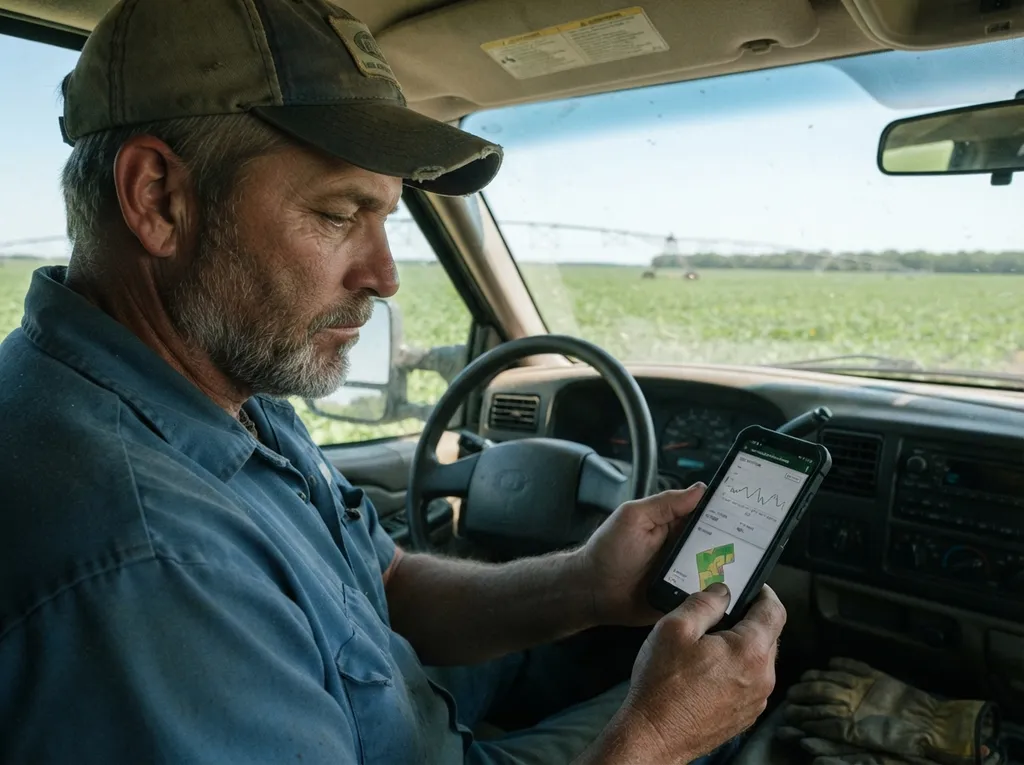
- Technology integration: automated valves, smart controllers and mobile dashboards for remote control
- Transparent reporting: water use, system performance and crop response, in clear reports
- Sustainability: water-use efficiency and soil health built in
What you receive
- An irrigation schedule driven by your crops' real needs
- Monitoring of soil moisture and water distribution
- Regular reports on water use and system performance
- Lower water and energy costs, with healthy crops
 Work process
How it works
- Step - [01]

Baseline:
We review your system, fields and current watering routine.
- Step - [02]

Set-up:
We put sensors, controllers and dashboards in place, where needed.
- Step - [03]

Scheduling and monitoring:
We schedule irrigation from crop, weather and soil-moisture data, and monitor results.
- Step - [04]

Reporting and adjustment:
We report on water use and performance, and fine-tune the schedule through the season.
Questions and answers
Questions about Smart Irrigation Management
Scheduling and running irrigation from real data (crop needs, weather, soil moisture and evapotranspiration) instead of fixed routines.
Usually yes. Sensors, smart controllers and automated valves can often be added to systems already in place.
Yes. With smart controllers and mobile dashboards, you can monitor and run irrigation from your phone.
Water use, system performance, crop response and resource-efficiency figures.
Farms of all sizes, and institutions that manage irrigated land.